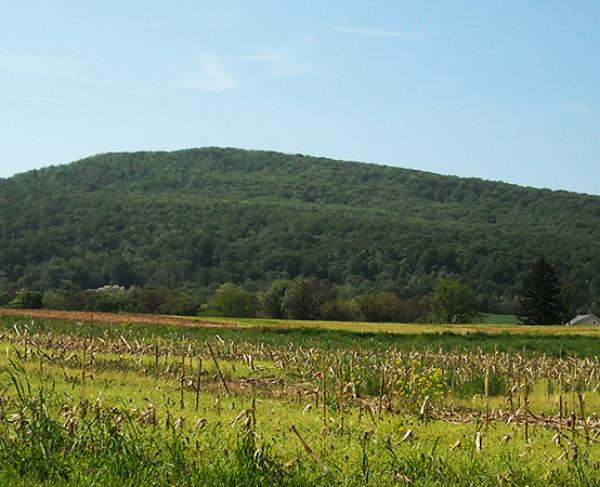
South Mountain
Crampton's, Turner's and Fox's Gaps
Frederick County and Washington County, MD | Sep 14, 1862
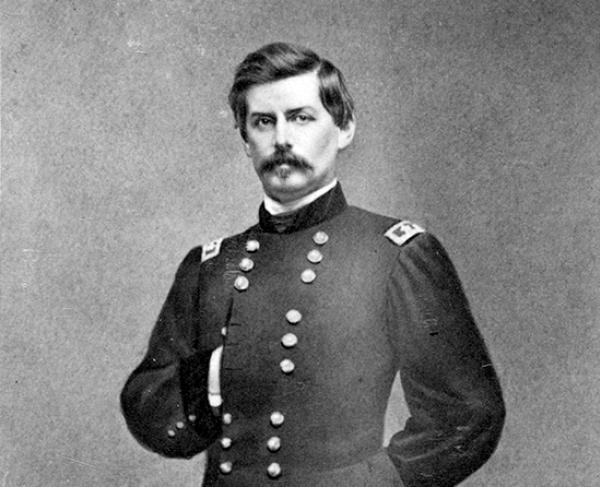
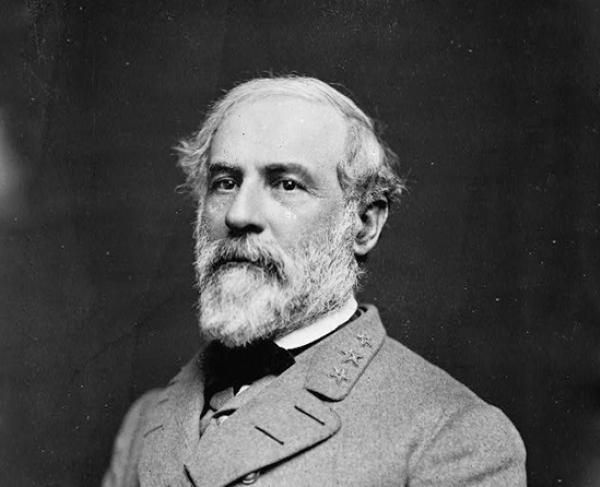
On September 14, 1862, Union forces led by Maj. Gen. George B. McClellan met Gen. Robert E. Lee’s divided army at the Battle of South Mountain. While Union forces were able to gain control of the mountain, they could not stop Lee from regrouping and setting the stage for the Battle of Antietam three days later.
How It Ended
Union Victory. By nightfall on September 14, 1862, Gen. Robert E. Lee ordered his outnumbered forces to withdraw from South Mountain, and he abandoned all three mountain passes (Fox’s, Turner’s, and Crampton’s). The fighting gave the Confederacy time to consolidate and ready itself for the Battle of Antietam on September 16-18, 1862.
In Context
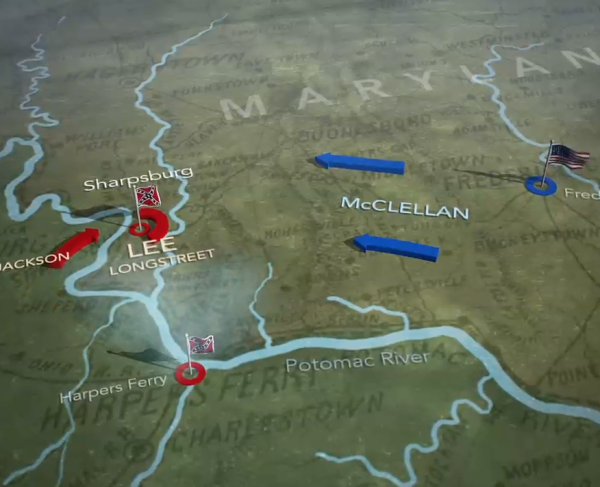
Victory at Second Manassas in the summer of 1862 encouraged Robert E. Lee to attempt a war-winning movement north. His new campaign would relieve war-torn Virginia, draw new recruits to his army, and win a decisive victory on Northern soil to earn European recognition of the Confederacy. On September 4, 1862, Lee and his Army of Northern Virginia crossed the Potomac River unopposed and entered Maryland for the first time.
To remove the threat of Union troops to his communication and supply routes, Lee divided his invasion force on September 9 and sent Lieut. Gen. Thomas “Stonewall” Jackson to seize the Federal garrisons at Harpers Ferry and Martinsburg. Lieut. Gen. James Longstreet’s wing continued into western Maryland and threatened the Pennsylvania border.
However, Union Maj. Gen. George B. McClellan received a mislaid copy of Lee’s Special Order #191 on September 13 that revealed the Confederate plans and objectives. Aware that a portion of Lee’s army was now vulnerable to attack, McClellan advanced toward the South Mountain range that separated the two armies and planned to attack Lee’s minimal forces there.
On September 13, Union Maj. Gen. George B. McClellan received a mislaid copy of Lee’s Special Order #191 that revealed the Confederate plans and objectives for the Maryland Campaign. Even though the intelligence was four days old, McClellan knew that Jackson was behind schedule at Harper’s Ferry, which was surrounded but not yet taken, and that Lee’s army was divided and separated over miles of Maryland countryside. Aware that a portion of Lee’s army was now vulnerable to attack, McClellan advanced toward the South Mountain range to attack Lee’s forces there.
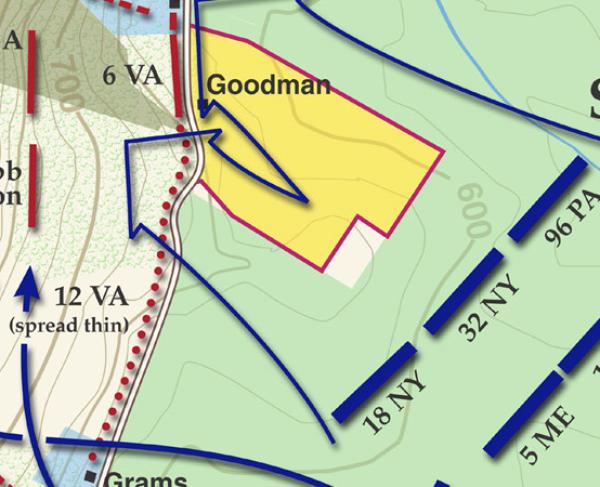
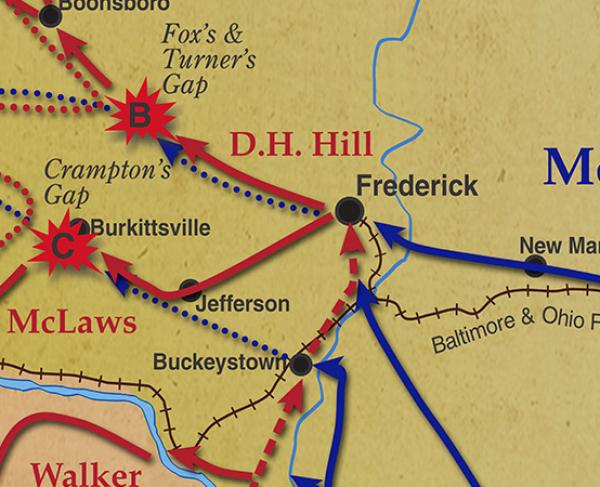
A single 5,000-man Confederate division under D.H. Hill protected Fox’s and Turner’s Gaps at South Mountain. Early on September 14, Union Gen. Jacob D. Cox’s Kanawha Division of the Union IX Corps launched an attack against Samuel Garland’s brigade at Fox’s Gap. Cox’s 3,000 Ohioans overran Garland’s North Carolinians, driving the Southerners from behind a stone wall and mortally wounding Garland. However, by nightfall, Confederate soldiers still held the western edge of Fox’s gap.
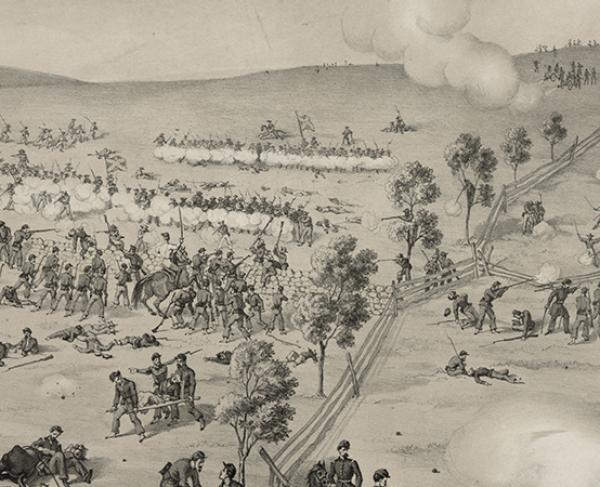
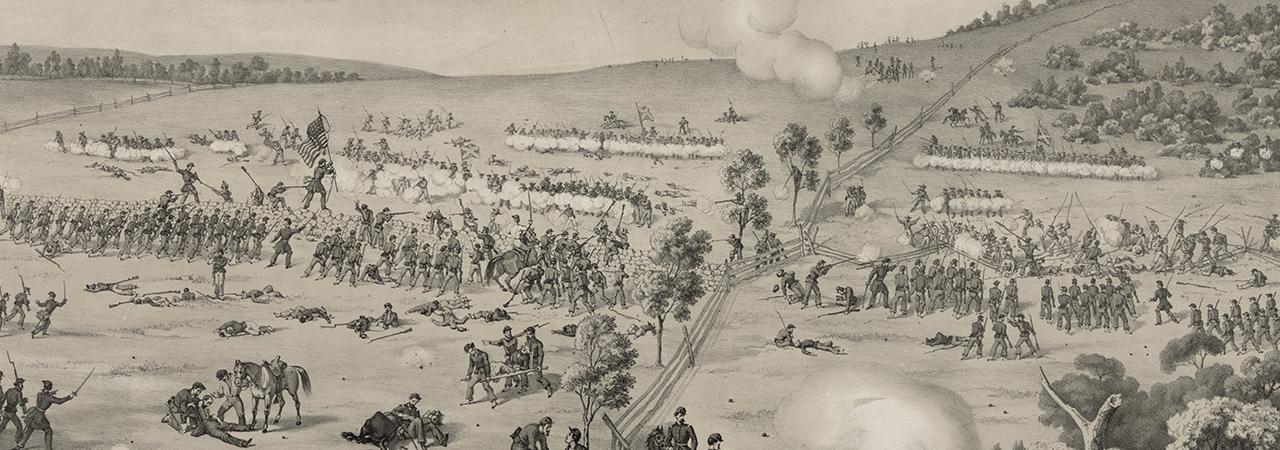
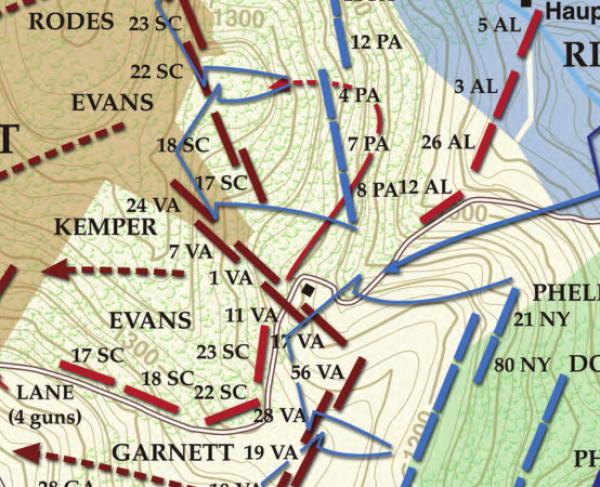
At Turner’s Gap, Union Maj. Gen. Joseph Hooker’s I Corps arrived on the steep mountainside near Frostown, and divisions under George G. Meade and John P. Hatch made relentless charges on the gap’s northern edge. After a brutal firefight along a cornfield fence, Hatch broke through the Rebel line. Only the timely arrival of reinforcements from Longstreet prevented the Confederate line from collapsing. By nightfall, the Confederates still maintained control of Turner’s Gap.
At Crampton’s Gap, Maj. Gen. Henry W. Slocum division charged headlong up the slope and dislodged the Confederate soldiers stationed there. Even with more reinforcements, a second attack drove the remaining Confederates down the western slope of South Mountain. By nightfall, Crampton’s gap was in Union control.
Even though the Confederates still held onto Fox’s and Tuner’s Gaps, Lee ordered his outnumbered forces to withdraw from South Mountain. By sunrise on September 15, the Confederates had completely withdrawn.
2,325
2,685
Though the Battle of South Mountain was ultimately a Union victory, the day-long fighting gave Lee time to reunite his troops. On September 15, Jackson’s army successfully defeated Colonel Dixon S. Miles’s army at Harper’s Ferry. After leaving several divisions to guard the city, Jackson headed toward Antietam Creek near Sharpsburg, MD, to unite with Longstreet’s Army. Three days later, Union and Confederate forces faced off during the Battle of Antietam on September 17, 1862.
Robert E. Lee launched the Maryland Campaign to draw the war away from war-torn Virginia, attract new recruits to his army in Maryland, and win a decisive victory on Northern soil to earn European recognition of the Confederacy. In addition, Lee hoped that by bringing the war into the Northern States, Lincoln might feel pressure from Northern constituents to negotiate peace instead of continuing the war.
Because of the defeat at the Battle of South Mountain and the inconclusive victory at the Battle of Antietam three days later, Lee retreated into Virginia in 1862. However, by the Summer of 1863, Lee launched his second invasion into the Northern States and fought the Union army in Pennsylvania at the Battle of Gettysburg on July 1-3, 1863.
South Mountain: Featured Resources


All battles of the Maryland Campaign
Related Battles
28,000
18,000
2,325
2,685